

In This Article
When faced with unexpected financial challenges, having access to swift emergency funds can provide much-needed support and peace of mind. Whether it’s a medical emergency, job loss, or unforeseen repair expense, there are various options available to obtain immediate financial assistance. From personal loans to government programs and community support, this section explores the avenues individuals can explore to secure rapid cash loans and quick financial aid during times of crisis.
Key Takeaways:
- Swift emergency funds are crucial in navigating unexpected financial challenges.
- Explore emergency funding options such as personal loans, government programs, and community support.
- Rapid cash loans and fast emergency money can provide immediate financial aid.
- Expedited funds for emergencies can alleviate the stress and uncertainty of unexpected expenses.
- Consider building an emergency savings fund to create a financial cushion for sudden setbacks.
Building an Emergency Savings Fund for Financial Security
Creating an emergency savings fund is crucial in preparing for sudden financial setbacks. It serves as a safety net, providing individuals with a sense of financial security during uncertain times. By setting aside a portion of their income each month into a designated savings account, individuals can gradually build a cushion to handle unexpected expenses.
To begin, assess your monthly income and expenses to determine how much you can comfortably save. Aim to set aside a percentage of your earnings, such as 10% or more, towards your emergency fund. Treat it as a non-negotiable expense, just like paying bills or meeting other financial obligations.
Experts recommend saving enough to cover at least three to six months’ worth of living expenses. Consider factors such as rent or mortgage payments, utilities, groceries, healthcare costs, and any other essential expenses. Keep in mind that the size of your emergency savings fund may vary depending on your personal circumstances.
Once you have established your savings goal, make consistent contributions to your emergency fund. Automate your savings by setting up automatic transfers from your checking account to your designated savings account. This ensures that you prioritize building your emergency fund and reduces the temptation to spend the money on non-essential items.
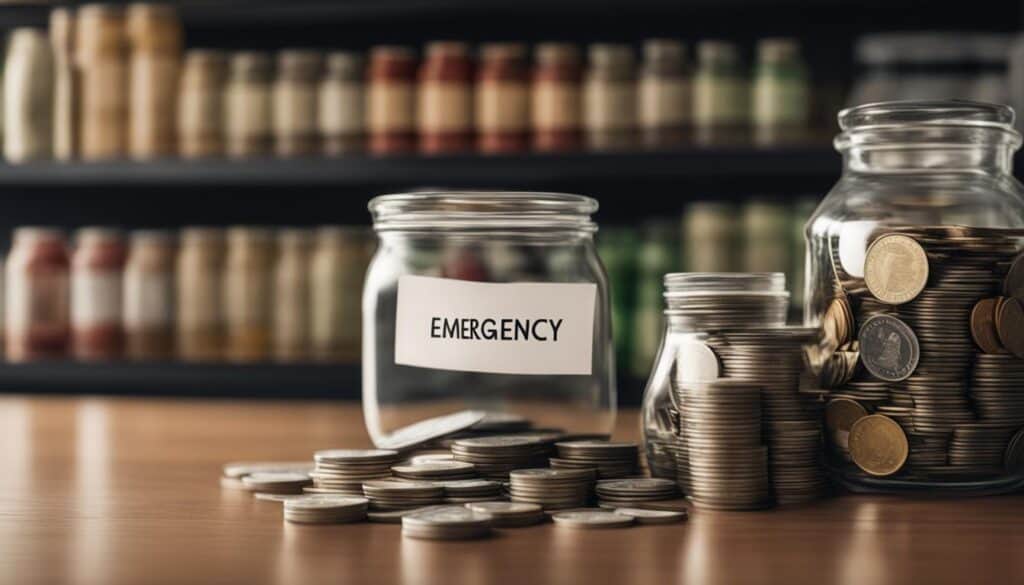
| Benefits of Building an Emergency Savings Fund |
|---|
| 1. Financial Security: Having an emergency savings fund provides peace of mind and security during unexpected financial challenges. |
| 2. Reduce Reliance on Credit: With an emergency fund in place, you can avoid accumulating debt or relying on high-interest credit cards during emergencies. |
| 3. Faster Recovery: An established emergency savings fund helps you bounce back quicker from sudden financial setbacks, allowing you to focus on solutions rather than worrying about finances. |
| 4. Avoid Stress and Anxiety: Knowing that you have a financial safety net can alleviate anxiety and stress, enabling you to navigate difficult situations with confidence. |

Building an emergency savings fund takes time and discipline, but the long-term benefits are invaluable. Start small, stay consistent, and watch your savings grow. Remember, emergencies can strike at any time, so it’s never too late to start building your financial security.
Exploring Government Assistance Programs for Swift Financial Support
During times of crisis, government assistance programs can provide valuable support in obtaining swift financial aid. These programs, offered by local, state, and federal agencies, aim to help individuals navigate financial hardships and access the assistance they need. Whether it’s unemployment benefits, housing assistance, or healthcare subsidies, understanding the eligibility criteria and application process is crucial for timely access to these essential resources.
One of the primary government assistance programs available is unemployment benefits. Designed to support individuals who have lost their jobs, these benefits provide temporary financial aid until they can secure new employment. Eligibility typically requires individuals to have been laid off through no fault of their own and actively seeking employment. The application process may involve submitting documentation such as proof of job loss and recent pay stubs.
Housing assistance programs can also provide crucial support for those facing financial difficulties. These programs aim to ensure individuals have access to safe and affordable housing. They may include rental assistance, subsidies, or even the provision of emergency shelter. Eligibility criteria may vary depending on the specific program and location, but typically consider factors such as income level, family size, and current housing situation.
Additionally, government assistance programs may offer healthcare subsidies to help individuals afford necessary medical care. These subsidies can help cover the cost of health insurance premiums and out-of-pocket expenses, making healthcare more accessible and affordable. Eligibility is often based on income level and factors such as household size. Applying for healthcare subsidies usually requires providing information about income, assets, and current healthcare coverage.
Table: Summary of Government Assistance Programs
| Program | Assistance Provided | Eligibility Criteria | Application Process |
|---|---|---|---|
| Unemployment Benefits | Temporary financial aid for individuals who have lost their jobs | Proof of job loss, actively seeking employment | Submit documentation such as proof of job loss and recent pay stubs |
| Housing Assistance | Rental assistance, subsidies, or provision of emergency shelter | Income level, family size, current housing situation | Varies based on specific program and location |
| Healthcare Subsidies | Assistance in covering health insurance premiums and out-of-pocket expenses | Income level, household size | Provide information about income, assets, and current healthcare coverage |
By exploring and understanding government assistance programs, individuals can access the swift financial support they need during times of crisis. Whether it’s unemployment benefits, housing assistance, or healthcare subsidies, these programs play a vital role in helping individuals navigate financial hardships and regain stability. It is important to stay informed about the eligibility criteria and application process to ensure timely access to the financial aid available.
Seeking External Financial Assistance for Immediate Relief
When faced with sudden financial challenges, it may become necessary to explore external sources of financial aid to obtain immediate relief. In such situations, there are several options that individuals can consider to access the necessary funds quickly.
Borrowing options:
One common avenue is applying for personal loans from banks or online lenders. Personal loans provide individuals with the flexibility to borrow a specific amount of money that can be repaid over a fixed period. It is important to compare interest rates and terms to ensure that the loan is obtained at the most favorable conditions.
Credit cards are another tool that can offer immediate financial relief. However, it is essential to use credit cards responsibly to avoid accumulating excessive debt. By paying the balance in full each month or making timely payments, individuals can prevent long-term financial struggles.
In some cases, borrowing from friends and family may be an option. While this can provide quick access to funds, clear communication and well-defined repayment terms are crucial to maintain healthy relationships.
Community support and nonprofit organizations:
In today’s digital age, crowdfunding platforms have emerged as a popular way to tap into the power of community support. Through these platforms, individuals can create campaigns and raise funds for their specific emergency needs. It is important to craft a compelling story and share the campaign with friends, family, and online communities to maximize the chances of success.
In addition to crowdfunding, nonprofit organizations dedicated to providing financial aid can also be a valuable resource. These organizations often offer grants or assistance programs that can help individuals facing financial hardships. Researching and reaching out to relevant nonprofit organizations can provide additional avenues for obtaining the necessary assistance.

When seeking external financial assistance, it is important to carefully consider the options available and choose the one that best suits the individual’s needs and circumstances. Whether it is a personal loan, credit card, crowdfunding platform, or nonprofit organization, each option has its own advantages and considerations. By being proactive and resourceful, individuals can find the right solution to alleviate their immediate financial challenges while working towards long-term financial stability.
Conclusion
Swift emergency funds are essential in navigating unexpected financial challenges. Building an emergency savings fund, exploring government assistance programs, and considering external sources of financial aid can help individuals establish a solid financial safety net. By being proactive and resourceful, individuals can overcome financial hardships and emerge stronger, more financially resilient, and ready to face future uncertainties.
Remember to compare different options, consider interest rates and terms, and borrow responsibly to ensure swift access to emergency funds when needed. It is crucial to make informed decisions and choose the most suitable avenue for financial assistance based on individual circumstances.
Financial stability is within reach, even during uncertain times. We encourage you to take the necessary steps to secure your financial well-being. With careful planning and the right resources, you can build a solid foundation that safeguards you against unforeseen financial setbacks and provides peace of mind.
FAQ
How can I access swift emergency funds?
There are various options available to obtain immediate financial assistance, such as personal loans, government programs, community support, and more. This section explores these avenues in detail.
What is the first step in preparing for financial uncertainties?
Building an emergency savings fund is crucial. By setting aside a portion of your income each month, you can create a financial cushion to handle sudden financial setbacks. Aim to save enough to cover at least three to six months’ worth of living expenses.
Are there any government assistance programs that can help during a crisis?
Yes, local, state, and federal agencies offer various programs to support individuals in financial hardships. These programs range from unemployment benefits and housing assistance to healthcare subsidies. Understanding the eligibility criteria and application process is important for timely access to the financial aid needed.
What options are available for immediate financial assistance?
When in need of immediate funds, personal loans can provide quick access for medical emergencies or urgent home repairs. Credit cards can offer immediate relief, but responsible usage is crucial to avoid long-term financial struggles. Borrowing from friends and family may be an option, but clear communication and repayment terms are essential. Crowdfunding platforms and nonprofit organizations dedicated to providing financial aid can also be sources of help.


